Rust Solo Survival With 14782 Hours of Experience
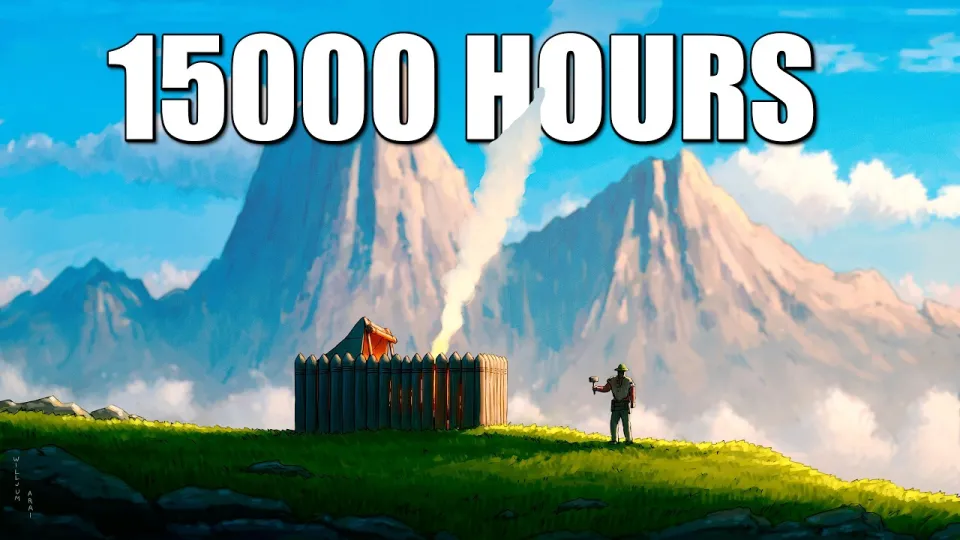
Video: How a solo with 14,782 Hours plays official rust...
Want articles like this for your own video to promote it on YouTube and Google? Order them through the Telegram bot @sat_sit_bot. It writes articles around your video, embeds the video and publishes them on popular niche websites (no ads). Try it free: 50 articles on us.
Rust solo survival on official servers comes down to preparation and discipline rather than raw aim: a 14,782-hour player survives by choosing base locations that hide from roamers, banking scrap before spending it, and picking fights only when the odds are already tilted. That playtime works out to roughly 1,180 hours per year over 12.5 years, which is why the decision-making in a run like this looks almost automatic. The session also carries a sponsor slot for the Manscaped Father's Day offer, where code WILLJUM15 gives 15% off plus free shipping on the Beard Hedger Plus.
What 14,782 hours actually changes in Rust solo play
Experience in Rust shows up as fewer wasted wipes, not faster reflexes. A player with this much time has already learned which monuments pay out early, which base spots get raided on day one, and how much scrap a solo can realistically bank before the first night. The habits that separate a veteran solo from a new one are concrete:
- Base placement before base size. A small, boring footprint in a low-traffic area survives longer than a flashy compound on a main road.
- Scrap discipline. Blueprints come first, weapons second; a solo who crafts a nail gun on impulse delays the workbench tier that actually unlocks progress.
- Listening over looking. Footsteps, door sounds and gunfire direction carry more information than the screen does.
- Raid timing. Official servers empty out at predictable hours, and a solo who farms during the quiet window keeps more of what they gather.
- Decoy thinking. Anything that draws attention away from the player's real position is worth the inventory slot.
The 14,782-hour figure also draws fair skepticism from viewers, and it is worth being precise: Steam counts every hour the game is open, including time spent idle or logged in while away from the keyboard. Even discounted for that, the number reflects years of wipe cycles rather than one long session.
Base building and the Luca.Builds design
The base in this run is not improvised: the build comes from builder Luca.Builds, whose designs Willjum credits directly. That matters for a solo because a well-planned footprint solves several problems at once. Compact cores with layered doors force raiders to spend more explosives per loot room, and honeycomb that looks thicker than it is makes a small base read as a poor target. When a solo copies a proven design instead of freestyling, the time saved goes into farming and scouting instead of rebuilding after a failed raid.
Decoys are part of the same logic. A mannequin placed in a window draws fire and attention toward a harmless target, giving the defender a free moment to reposition or flank. It costs almost nothing and works on exactly the kind of player who shoots first and checks afterwards.
Scrap, weapons and the solo economy
Solo economics on official Rust are about conversion rates: how much scrap becomes a blueprint, how much becomes a weapon, and how much is lost when a run goes wrong. Veterans tend to keep a strict order of operations. Workbench tier first, because it gates everything else. Then the tools that make farming faster. Weapons come last, and even then in cheap, replaceable forms.
Viewers regularly point out the gap between what a creator says and what the inventory shows, and it is a real dynamic of the game: a solo who claims not to spend scrap on guns will still end a wipe with a stack of crafted sidearms, because cheap weapons are insurance. The honest version of the rule is not "never craft weapons" but "never craft what you cannot afford to lose twice."
PvP decisions that keep a solo alive
A solo does not win official Rust by taking every fight. The pattern in high-hour play is selective aggression: engage when the opponent is already damaged, distracted by a third party, or carrying something worth the risk. Jumping a pair of players is a calculated move, not a reflex, and it depends on knowing the terrain, the escape route and how long the fight can last before reinforcements arrive.
That is also where experience shows most clearly. A veteran hears a bear behind them and a footstep fifty meters out, and treats both as information rather than noise. The same instinct applies to knowing when to break contact: a solo who disengages after a kill with the loot intact has won more than a solo who stays for a second fight and loses everything.
Typical viewer questions about long-hour Rust accounts
The most common doubts from viewers are about whether the playtime is real, whether solo official play is even viable, and why anyone would watch instead of play. On playtime: Steam hours include idle time, so treat the number as a ceiling, not a stopwatch. On solo viability: official servers reward patience, off-peak farming and small bases, and a solo who avoids the main roads can hold a wipe for days. On watching: Rust produces varied content because every wipe tells a different story, and many viewers follow the game without ever launching it.
Links from the video
- Manscaped Father's Day offer, 15% off plus free shipping with code WILLJUM15
- Willjum on Patreon
- Willjum on Twitch
- Willjum on Twitter
- Creative Commons Attribution 4.0 license
Final thoughts on solo official Rust
Long-hour solo play in Rust is a study in risk management rather than mechanical skill, and this run shows the pattern clearly: a proven base design, scrap spent in the right order, fights chosen rather than stumbled into. The 14,782-hour figure is best read as years of wipe cycles, not a single marathon, and the calm pacing is what makes the session watchable. Willjum's breakdown is the source for anyone who wants to see how those habits look in practice on official servers. If the grooming sponsor slot caught your attention, the Manscaped page for Willjum's code is where the discount lives.
Key takeaways
- Willjum's solo run is built on 14,782 hours of Rust playtime, roughly 1,180 hours per year across 12.5 years.
- The run takes place on official vanilla Rust servers, where wipe-day competition and raid risk are at their highest.
- The base in the video was designed by builder Luca.Builds, whose channel Willjum credits in the pinned comment.
- A mannequin placed in a window was used as a decoy to draw enemy fire away from the real player.
- The session is presented as a chilled solo survival story rather than a pure PvP highlight reel.
Questions & answers
Is 14,782 hours of Rust actually possible?
Yes, but with a caveat. Steam counts every hour the game is running, including time spent idle or logged in while away from the keyboard, so the figure is a ceiling rather than active playtime. Spread across roughly 12.5 years, it works out to about 1,180 hours per year, which is plausible for a long-term creator who treats the game as a job.
Can a solo player survive on official Rust servers?
A solo can hold a wipe on official servers by avoiding main roads, farming during off-peak hours, and keeping the base small and layered. The key is spending scrap on workbench tiers and tools before weapons, and only taking fights where the odds are already favorable. Patience matters more than aim.
Why do creators place mannequins in windows?
A mannequin in a window acts as a decoy. Raiders and roamers fire at movement behind glass, which wastes their ammo and reveals their position while the defender repositions. It costs almost nothing and works especially well against players who shoot before they confirm a target.
Why watch Rust videos instead of playing the game?
Rust produces a different story every wipe, from base builds to raid defenses, so the content stays varied without the viewer investing dozens of hours. Many viewers follow the game purely as spectators because the time cost of playing on official servers is high. Creator-driven narratives make that variety easy to follow.
Source: How a solo with 14,782 Hours plays official rust... · Markdown version