How to Build Low Cortisol Aim in Valorant for Calm, Consistent Flicks
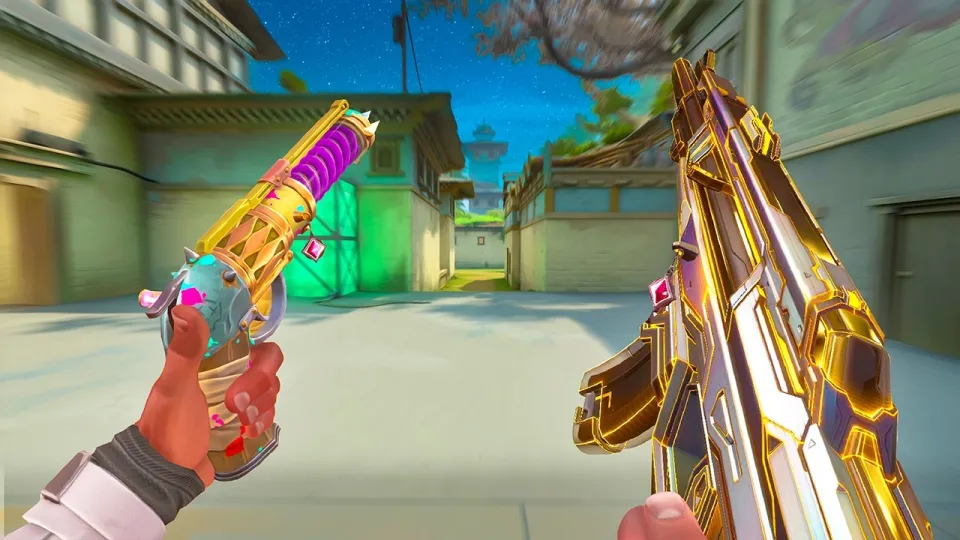
Video: low cortisol aim..
Want articles like this for your own video to promote it on YouTube and Google? Order them through the Telegram bot @sat_sit_bot. It writes articles around your video, embeds the video and publishes them on popular niche websites (no ads). Try it free: 50 articles on us.
Low cortisol aim in Valorant is the practice of keeping your mouse hand and your decisions flat and repeatable under pressure, so your crosshair placement does the work instead of an adrenaline spike. It is built from a stable sensitivity, a crosshair you can actually see, controlled movement and pre-aimed angles, not from raw flick speed. The reference point here is the Phoenix gameplay from Rawzu's "low cortisol aim.." video, and if you want the same kind of frame consistency the creator points to PC optimization for Valorant as the starting layer.
What low cortisol aim actually means in Valorant
Low cortisol aim describes a playstyle where your aim looks almost boring: the crosshair is already where the enemy will appear, the correction is small, and the shot happens without a visible panic. In Valorant this matters more than in faster shooters because a duel is usually decided before the first bullet — by head height, angle selection and whether your movement stopped cleanly. A player with high-tension aim often wins the first flick and loses the next three rounds to overcorrection, wide swings and jittery micro-adjustments. The calm version trades highlight clips for repeatable numbers: the same entry angle, the same stop, the same spray.
The settings Rawzu uses and how to copy them sensibly
Rawzu's setup is a useful baseline because every value is deliberately low-noise. His listed configuration:
- Sensitivity: 400 DPI at 0.625 in-game, which is roughly 250 eDPI — a control-oriented range where a full swipe covers a wide arc rather than a quarter turn.
- Resolution: 1440x1080, a stretched 4:3 ratio that widens player models and makes head height easier to read.
- Crosshair: 1-6-2-2 — thin lines, short length, tight gap, no dot, so the center stays visible against Phoenix's own fire effects.
- Mouse: Logitech G Pro X Superlight 2, a lightweight wireless shape suited to small, wrist-driven corrections.
- Mousepad: Artisan Zero Soft, a control surface that adds stopping friction.
- Monitor: Zowie XL2566K at 360Hz, which shortens the gap between what you see and what you react to.
Do not paste these numbers blindly. Copy the logic: low eDPI plus a control pad plus a minimal crosshair equals fewer accidental movements. If 250 eDPI feels like dragging through mud, step up in small increments of 0.025 rather than jumping to a familiar high value.
How to train calm aim instead of reactive aim
Calm aim is trained by removing the reasons your hand tenses. Start with a fixed warm-up that never changes: five minutes of straight-line tracking on a wall, five minutes of head-height strafing between two angles, then a Deathmatch where the only goal is to stop before shooting. In Valorant, the shot after a moving peek is accurate only when the counter-strafe has settled, so drill the stop as its own action. Second, lower your grip pressure — a mouse held with a light thumb and relaxed wrist produces smaller corrections than one squeezed like a stress ball. Third, cap your sensitivity changes to one per month; constant switching keeps your muscle memory in a permanent state of surprise, which is exactly the tension low cortisol aim tries to remove.
Movement and Phoenix utility that keep duels boring
Phoenix is an offensive duelist built to hunt enemies while crippling their ability to fire back, and his kit rewards a pre-planned approach over reflex. Curveball blinds enemies even when they are tucked behind corners, so the correct pattern is flash, hold the angle the blinded player must walk into, and let them arrive at your crosshair. Blaze creates a vision-blocking wall that also damages anyone crossing it, which lets you take open ground without exposing yourself to three angles at once. Hot Hands and the Run it Back ultimate make Phoenix durable enough to survive a mistake, but the calm version of the agent uses them as insurance, not as an excuse to swing wide. The movement rule is simple: clear one angle, stop, clear the next. Never strafe and shoot at the same time, and never peek the same corner twice in a row against an operator.
Common doubts about calm aim, answered from the community
Viewers of the video repeatedly raise the same practical questions, and they map onto real habits worth fixing. One recurring theme is that aim looks impressive while movement looks even better — which is the point: movement sets up the shot. Another is the surprise of an enemy appearing from an unexpected position; that is usually a minimap and sound cue problem, not an aim problem. Others note the audio and editing choices, which is a reminder that clips are curated and your ranked sessions are not. Treat highlight reels as a target, not a benchmark: measure your own progress by first-bullet accuracy and deaths per round, not by whether a play would look good on a short-form feed. If your PC stutters during a spray, no amount of calm breathing fixes it, so handle the technical layer through the optimization page linked by the creator.
Useful links
- PC optimization for Valorant: https://hone.gg/a/rawzu
- Rawzu's original music on Spotify: https://open.spotify.com/artist/6DbATPR1PTNMx7U918bg1Q
- Rawzu's Discord community: https://discord.gg/axnFwyvxp3
Making calm aim stick over a full season
Low cortisol aim is a habit stack, not a talent: a control-friendly sensitivity around 250 eDPI, a readable 1-6-2-2 crosshair, a stretched 1440x1080 resolution, a control mousepad and a warm-up you never skip. Build the routine around stopping before shooting, pre-aiming head height on every angle, and using Phoenix's Curveball and Blaze to force enemies into the crosshair you already hold. Keep one sensitivity for a month, review your deaths for positioning errors instead of blaming your hand, and let the hardware do its quiet job — a 360Hz panel and a Superlight 2 remove friction, they do not create skill. The "low cortisol aim.." breakdown comes from the Rawzu channel, which is a good place to watch the calm style applied in real Phoenix rounds. If you want the same stable frames the creator plays on, start with PC optimization for Valorant before you touch another sensitivity value.
Key takeaways
- Low cortisol aim means keeping mouse control and decision-making steady under pressure instead of relying on adrenaline spikes.
- Rawzu runs 400 DPI at 0.625 sensitivity, 1440x1080 resolution and crosshair 1-6-2-2.
- His hardware: Logitech G Pro X Superlight 2, Artisan Zero Soft mousepad, Zowie XL2566K 360Hz monitor.
- Phoenix pairs Curveball and Blaze to blind and wall off angles, which rewards calm pre-aim over panic flicks.
- A 360Hz display and a control pad reduce the visual and physical noise that pushes aim toward overcorrection.
Questions & answers
What sensitivity does Rawzu use in Valorant?
Rawzu lists 400 DPI with 0.625 in-game sensitivity, which works out to about 250 eDPI. That is a control-oriented range suited to small corrections rather than large flicks. Pair it with a control mousepad and adjust in steps of 0.025 if it feels too slow.
Is low cortisol aim just a low sensitivity?
No. Sensitivity is only the hardware layer. Low cortisol aim also depends on crosshair placement at head height, stopping movement before shooting, and taking one angle at a time instead of swinging wide. A calm player with a high sensitivity can still look steady if their movement and pre-aim are disciplined.
Why does my aim fall apart in ranked but look fine in Deathmatch?
Deathmatch removes the consequences, so your hand stays loose. In ranked, tension rises with round stakes, grip pressure increases, and corrections get larger. Fix it by running the same warm-up before ranked, keeping grip light, and judging yourself on first-bullet accuracy rather than highlight plays.
Do I need a 360Hz monitor to aim like this?
No, but a high refresh rate reduces the delay between seeing an enemy and reacting, which makes small corrections feel more predictable. A 240Hz panel is already a large step up from 60Hz. Prioritize stable frame rates and a consistent mousepad surface before upgrading the display.
Source: low cortisol aim.. · Markdown version