Rust Secret Mountain Base That Nobody Notices
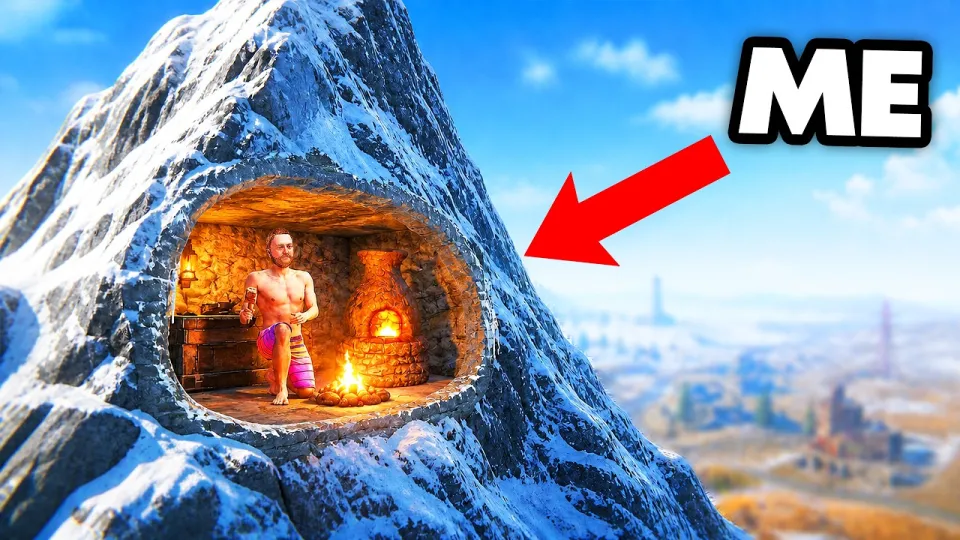
Video: I Lived in a Secret Mountain Base in Rust
Want articles like this for your own video to promote it on YouTube and Google? Order them through the Telegram bot @sat_sit_bot. It writes articles around your video, embeds the video and publishes them on popular niche websites (no ads). Try it free: 50 articles on us.
A Rust secret mountain base is a small, low-profile structure built into terrain that players rarely path through — a cliff shelf, a rock overhang or a slope above a monument — where the goal is to be overlooked rather than to survive a raid. It works because most raiders hunt along roads, rivers and popular monuments, and a base that never appears on those routes never enters the target list. The approach is the one Memeio documents in the video I Lived in a Secret Mountain Base in Rust, and the channel's updates land on Memeio's X account.
Why a mountain base beats a fortified compound for solos
A hidden mountain base trades armour for obscurity, and for a solo player that trade is almost always correct. A 2x2 with honeycomb on a busy server needs stone, metal and wood flowing in constantly; miss a day of farming and the base decays or gets scouted as abandoned. A 1x1 or 1x2 tucked into a rock face costs a few hundred stone to build and a fraction of that to maintain, so the wipe can continue even after a bad night.
The second advantage is time. Raiders on official and high-pop servers work from a mental map of likely targets: bases near launch sites, large compounds visible from the road, anything with a garage door facing outward. A structure that sits above the tree line or behind a ridge breaks that map. The trade-off is real — no room for a large box, no workbench tier 3 without expansion — so the base becomes a stash and a respawn point rather than a fortress.
Choosing the spot: terrain reading in practice
Site selection decides whether a mountain base stays secret, and the checklist is short enough to run in the first hour of a wipe.
- Pick a slope that faces away from the nearest road and monument, so passing players see rock rather than a doorway.
- Look for natural cover — a boulder cluster, a rock arch, a dip between two ridges — that hides the silhouette from below.
- Check the sightlines from the air: minicopters and helicopters cross mountains constantly, so a flat roof with a visible door frame is a giveaway.
- Avoid building within a short run of another base; neighbours notice construction noise and new foundations faster than anyone else.
- Confirm the terrain allows a foundation and a door without clipping through rock, or the whole plan collapses on placement.
A useful rule of thumb: if the spot is visible from a monument's approach path, it is not secret, it is just inconvenient.
Camouflage that actually fools people
Camouflage in Rust is about breaking the shape, not about matching the colour. Mountain terrain is grey and brown, and a stone or wood base already blends reasonably well; what stands out is a clean rectangular outline, a lit doorway, and a roof that reflects sky. Players who hide successfully tend to build low, use the rock as the fourth wall, and keep anything bright — furnaces, large boxes visible through an open door, a turret — out of sight from the outside.
The community is blunt about this. Viewers of the video joke that hiding behind your own hands does not make you invisible, and that a base sticking out of a mountain near two other bases is not a secret at all. That criticism is fair and worth taking seriously: the camouflage only works if you never give a passer-by a reason to stop. No smoke, no loud farming at the door, no sprinting downhill in full view after every loot run.
Loot runs, gear and the eco-raiding spear trick
A mountain base lives or dies on how efficiently you convert short runs into gear, because you cannot store a huge stockpile. The practical loop is: farm close to home, bank often, and never carry more than one trip's worth of value on you. Primitive gear is not a disadvantage when the whole plan is to avoid fights — a bow and a stack of spears handle the early game, and a crossbow or a cheap rifle covers the mid-wipe if you can keep it safe.
One trick from the comments deserves a place in any solo's notes: broken wooden spears can be crafted into stone spears, so keeping the broken ones ahead of the intact ones in your inventory lets you effectively double your spear count for the price of some stone. It is a small optimisation, but on a wipe where every resource goes into staying hidden, small optimisations compound.
When the secret base fails
Every hidden base eventually meets the two things it cannot hide from: a cheater or a determined neighbour. The video's run ends in a confrontation with a cheater, and the reaction in the comments — that cheaters ruin every game — is the standard, correct response. On official servers there is no terrain trick that beats someone seeing through walls, so report and move on rather than rebuilding in the same spot.
The other failure mode is your own footprint. A player who builds a second structure nearby, leaves a sleeping bag trail, or starts a furnace farm on the ridge has effectively published the location. If a neighbour does find the base, the cheapest answer is usually to abandon it quietly and rebuild elsewhere rather than to reinforce a position that is now known.
What the hidden-base genre gets right and wrong
Hidden base videos are popular because they promise something Rust rarely delivers: safety without a clan. The honest version is that a small mountain base reduces the chance of being raided, it does not eliminate it, and the videos that show a base surviving a whole wipe are showing a combination of good placement, low server attention and a bit of luck.
Memeio's format leans into that tension, and long-time viewers note the pattern of convenient early loot and the running joke around it. Treat those moments as entertainment rather than a strategy guide: the transferable lessons are the placement checklist, the upkeep maths and the discipline of staying quiet, not the lucky crate.
Useful links
- Memeio on X — channel updates, clips and announcements.
- Epidemic Sound — the music library credited for the video's soundtrack.
Final thoughts
A Rust secret mountain base is the cheapest insurance a solo player can buy: low upkeep, low visibility, and a location that never appears on a raider's route. The strategy only holds if the player matches it with discipline — short farming trips, no visible structures, no noisy neighbours — and accepts that a cheater or a lucky scout can still end the wipe. Memeio's mountain run is a good demonstration of the upside and the limits of the idea, and the channel is worth following for more full-wipe experiments. For updates and clips, follow Memeio on X.
Key takeaways
- A mountain base survives by being boring to look at, not by being unreachable — camouflage beats concrete on a crowded server.
- Tiny footprints (1x1, 1x2, 2x1) cost a fraction of the upkeep a 2x2 with honeycomb demands, so a solo player can hold them for a full wipe.
- Broken wooden spears in Rust can be recycled into stone spears, effectively doubling your thrown-weapon count for the cost of a little stone.
- Memeio's mountain run ends in a confrontation with a cheater, a reminder that official servers carry risk beyond raids.
- The channel posts full-wipe survival videos on YouTube and shares updates through https://x.com/MemeioYT.
Questions & answers
Does a hidden mountain base actually survive a full wipe in Rust?
Sometimes, but not reliably. A small base in low-traffic terrain avoids most raids because raiders target visible compounds near monuments and roads. It still fails against cheaters, random helicopter spotting, or a neighbour who decides to scout the ridge.
How much upkeep does a tiny mountain base need compared with a 2x2?
A 1x1 or 1x2 costs a small fraction of the stone a honeycombed 2x2 requires, which is why solos can hold one for a whole wipe on limited farming time. The trade-off is storage space: you get a stash and a respawn, not a workshop.
What is the spear crafting trick mentioned by viewers?
Broken wooden spears can be turned into stone spears, so keeping broken spears ahead of intact ones in the inventory lets you convert junk into usable throwables. It effectively doubles your spear count for the cost of some stone.
Should I build near other bases on a mountain?
No. Neighbours notice new foundations and construction noise faster than anyone else, and a base within sight of another player's roof is not hidden. Pick a slope that faces away from roads and existing structures.
Source: I Lived in a Secret Mountain Base in Rust · Markdown version